Understanding Phenotypic Allele Detail Pages
This help document answers the following questions about the Phenotypic Allele Detail pages.
See also:
Which fields should show up on these pages?
Depending on data availability, the Phenotypic Allele Detail page contains some or all of the field information listed in the table below.
Notes:
- If the allele type is QTL, the name of the detail report is QTL Variant Detail, and QTL information replaces Allele in the field names of the table.
- If the allele type is transgene, the name of the detail report is Transgene Detail, and Transgene information replaces Allele in the field names of the table.
The fields appearing in the detail report vary from allele to allele, depending on the available data. The table below describes all the possibilities.
How do I interpret the results in these fields?
| Field | Description |
| Allele |
| Symbol |
Official symbol for the allele. |
| Name |
Approved name for the allele. |
| ID |
MGI identifier of the allele. |
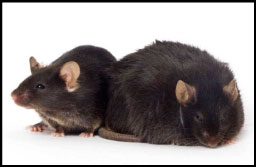
| image |
Primary image for the allele, if available, linked to the Image Detail page. |
| Show all images... |
Link to the All Images for Allele page, a display of image for any genotypes involving this allele data. |
|
| Synonyms | Names for the allele other than the name approved by the International Nomenclature Committee, including author synonym. |
Allele details | Information returned from the categories selected on the Phenotypes, Alleles, and Disease Models Query Form. Note: Only some alleles return all of these details.
| Allele Type | Type of allele by mode of origin. |
| Inheritance Mode | Phenotypic effect of the allele when heterozygous with the wild type allele. Note: This information is frequently not entered. |
| Strain of Origin | Strain or genetic background in which the allele originated. |
| ES Cell Line | Non-mutant ES cell lines associated with the allele. Note: This information is not present for spontaneous, chemical, or radiation induced, etc. |
| ES Cell Line Strain | Strain of origin for any non-mutant ES cell line associated with the allele. |
| Mutant ES Cell Line | Mutant ES cell line accession identifier (ID) if it has one, or its name, if it does not, followed by the name of its provider, in parentheses. Example: Ex1 (BayGenomics) |
| Mutation | Any annotation entry for a molecular mutation. If there are no entries, but there is a molecular note, Undefined appears. Molecular Notes appear next, if available, ending with molecular references, linked to MGI Reference Detail pages. |
| Gene Expression in [allele name] mutants | Number, in parentheses, of gene expression assay results involving the featured allele, linked to a corresponding Gene Expression Assay Results Summary Report. |
| International Mouse Strain Resource | A link to the IMSR summary page resulting from a query on the marker/gene symbol listed in Gene information below. |
| References and Additional Information | See below: links to either the Additional Information or References section of this report. |
| Allele Status, Submitted by, Approval date | Whether the allele is approved or not, the initials of the curator who entered allele data into the database, and date of allele approval. |
|
Gene information | Some or all of the following: symbol, name, chromosome, genetic position (cM offset), cytogenetic band position, genome coordinates, strand, and source (Ensembl or NCBI) of the mouse genetic marker. See Using the Phenotypes, Alleles, and Disease Models Query Form for a complete description. |
| Phenotypes | Phenotypic details for all genotypes that include at least one of the returned alleles.
| Allelic Composition | Genotype of each allele, linked to its MGI Allele Detail page. |
|---|
| Genetic Background | Mouse strains involved, if known. |
Beneath the table is a list of any high-level phenotypic terms (e.g., behavior/neurological), in the phenotype descriptions. Beneath each term is the specific term, linked to a Mammalian Phenotype Browser Term Detail page followed by its MGI reference number, linked to the MGI References Query Results Detail page. |
| Mouse models | List of all mouse genotypes annotated to the disease. Results are sorted into five categories (if there is no result, a category does not appear) for models with:
- phenotypic similarity to human disease and etiologies involving orthologs (the human ortholog of the mouse gene is associated with the same disease). If a genotype appears in this category, it will not be associated with any of the other four categories except transgenes or other mutation types.
- phenotypic similarity to human disease but a distinct etiology i.e., human genes are associated with this disease; orthologs of those genes do not appear in the mouse genotype.
- phenotypic similarity to human diseases with unknown etiology or involving genes where the human ortholog is unknown.
- transgenes or other mutation types (appears only if there are diseases annotated to an allele of a non-gene marker).
- No similarity to the expected human disease phenotype.
| Human Disease | All human diseases annotated to any mouse genotype containing the allele. Full disease term (e.g., Aniridia, TypeII; Peters Anomaly; Frasier Syndrome; Wilms Tumor 1), linked to the (MGI) Human Disease and Mouse Model Detail page. The OMIM accession identifier appears beneath the term (e.g., 106210; 60387), linked to its OMIM record. |
| Note | Column containing an alphanumerical character (linked to a footnote at the bottom of the table) if there is any additional information about the disease or model. If the word Not appears, it means that the reference's author(s) looked for but found no similarity to the expected human disease phenotype in the mouse genotype specified. |
| Genotype |
| Allelic Composition | Allele pairs that contribute to the genotype and mouse strain background. Each allele is linked to its corresponding Phenotypic Allele Detail page. |
| Genetic Background | Mouse strains involved, if known. |
|
| Ref(s) | The supporting reference linked by its MGI reference number to the MGI Reference Detail page containing the full citation. |
|
| Additional information | Miscellaneous data about the allele that does not appear in the above categories such as:
GenBank accession identifier for the mutation
other origin information
Note: If there is no additional information, this field does not appear. |
| References | - The original allele reference linked by its MGI J number to the MGI Reference Detail page containing the full citation.
- All references (number in parentheses) examining the phenotype of the allele, linked to the allele's Reference Summary.
|
|---|
Back to Top
Should there be an image of a mouse on all Phenotypic Allele Detail pages?
Depending on availability, an image associated with this allele may appear on the page.
Can I enlarge the image?
Yes. When you click anywhere on the image, the Image Detail page appears.
Back to Top
What happens if I click the Your Input Welcome button?
The Your Input Welcome button appears as part of the detailed query results for an allele, located at the top right of the screen. Clicking the button brings up a form for submitting updates and additions to the allele data you are viewing. This provides an easy way for you to help keep data current.
Back to Top