About   Help   FAQ
Ay
Spontaneous Allele Detail

Nomenclature
Symbol: Ay
Name: nonagouti; agouti yellow
MGI ID: MGI:1856798
Synonyms: A(y), Ay
Gene: a   Location: Chr2:154617138-154876748 bp, + strand    Genetic Position: Chr2, 89.0 cM
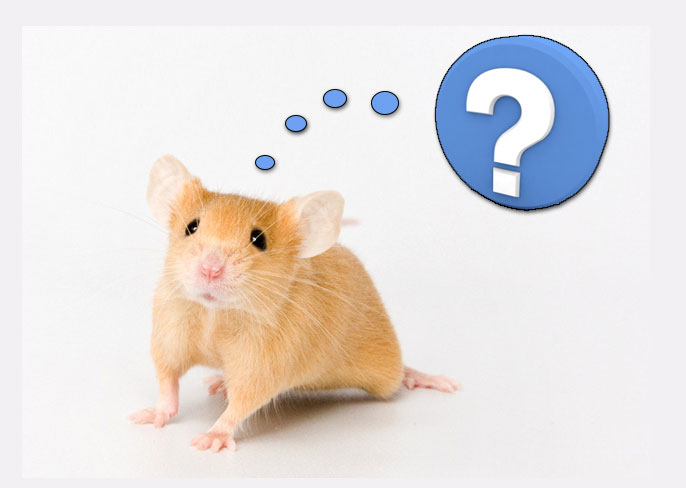
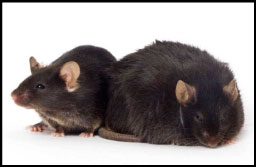
Ay/a mouse

Show the 4 image(s) involving this allele.

Mutation
origin
Strain of Origin: old mutant of the mouse fancy
Mutation
description
Allele Type: Spontaneous
Mutation: Other
  The Ay mutation appears to be a DNA structural alteration that disrupts a gene, hnRNP associated with lethal yellow (Raly), 5' to the agouti locus and places the agouti locus under the control of the Raly promotor. (J:12911, J:17512, J:18921)
Inheritance: Semidominant
Find Mice (IMSR)
Mouse strains and cell lines available from the International Mouse Strain Resource (IMSR)
Carrying this Mutation: Mouse Strains: 10 strains available      Cell Lines: 0 lines available
Carrying any a Mutation: 314 strains or lines available
Expression
In Mice Carrying this Mutation: 8 assay results
Phenotype
summary
help icon
Phenotype Summary by Mammalian Phenotype terms

(show or hide all annotated terms)

Genotypes are listed in the next section.

      Key:  
hm homozygous ht heterozygous
cn conditional genotype  cx complex: > 1 genome feature
tg involves transgenes ot other: hemizygous, indeterminate,...
N normal phenotype expected model not found
Affected SystemsGenotypes:
 
ht1
 
ht2
 
ht3
 
ht4
 
cx5
 
cx6
 
cx7
 
cx8
 
cx9
 
cx10
 
cx11
 
cx12
 
cx13
 
cx14
 
cx15
 
cx16
 
cx17
 
cx18
 
cx19
 
cx20
 
cx21
 
cx22
 
cx23
 
cx24
 
cx25
 
cx26
 
cx27
 
cx28
 
cx29
 
cx30
 
cx31
 
cx32
  
adipose tissue          
                            
  
behavior/neurological          
                           
  
craniofacial          
                
  
digestive/alimentary system          
                               
  
endocrine/exocrine glands          
                               
  
growth/size          
                    
  
homeostasis/metabolism          
                            
  
liver/biliary system          
                               
  
pigmentation          
                            
  
renal/urinary system          
                             
  
skeleton          
                
  
skin/coat/nails          
                            
  
tumorigenesis          


Disease Models          
                              
Phenotypic
data by
genotype
Phenotypic Data by Genotype

(show or hide all phenotypic details)

GenotypeAllelic CompositionGenetic Background
  
 ht1   
Ay/Aw 129S1.C3-Ay/Aw Chr 19MOLF/Ei
  
 ht2   images  
Ay/a B6.Cg-Ay/J
  
 ht3   Disease Model  
Ay/A involves: C57BL/6
  
 ht4   Disease Model  
Ay/a involves: KK
  
 cx5   
Ay/a
Npbwr1tm1Rck/Npbwr1tm1Rck
involves: 129P/Ola * C57BL/6J
  
 cx6   
Ay/a
Agrptm2(DTR)Rpa/Agrp+
involves: 129S4/SvJaeSor * KK/Upj
  
 cx7   
Ay/A
Prkar2btm2Gsm/Prkar2btm2Gsm
involves: C57BL/6
  
 cx8   
Ay/A
Prkar2btm2Gsm/Prkar2b+
involves: C57BL/6
  
 cx9   
a/Ay
Zc3h4KK/Zc3h4KK
involves: C57BL/6J * KK-Ay
  
 cx10   
a/Ay
Zc3h4C57BL/6J/Zc3h4KK
involves: C57BL/6J * KK-Ay
  
 cx11   
a/Ay
Bwq2KK/Bwq2KK
involves: C57BL/6J * KK-Ay
  
 cx12   
a/Ay
Bwq10C57BL/6J/Bwq10C57BL/6J
involves: C57BL/6J * KK-Ay
  
 cx13   
a/Ay
Guq1KK/Guq1KK
involves: C57BL/6J * KK-Ay
  
 cx14   
a/Ay
Guq2C57BL/6J/Guq2C57BL/6J
involves: C57BL/6J * KK-Ay
  
 cx15   
Ay/a
Mssq1KK/TaJcl/?
involves: C57BL/6JJcl * KK/TaJcl
  
 cx16   
Ay/a
Mssq2C57BL/6JJcl/Mssq2KK/TaJcl
involves: C57BL/6JJcl * KK/TaJcl
  
 cx17   
Ay/a
Mssq3KK/TaJcl/?
involves: C57BL/6JJcl * KK/TaJcl
  
 cx18   
Ay/a
Mssq4KK/TaJcl/?
involves: C57BL/6JJcl * KK/TaJcl
  
 cx19   
Ay/a
Mssq5C57BL/6JJcl/?
involves: C57BL/6JJcl * KK/TaJcl
  
 cx20   
Ay/a
Mssq6C57BL/6JJcl/?
involves: C57BL/6JJcl * KK/TaJcl
  
 cx21   
Ay/a
Mssq6KK/TaJcl/?
involves: C57BL/6JJcl * KK/TaJcl
  
 cx22   
Ay/a
Mssq7KK/TaJcl/?
involves: C57BL/6JJcl * KK/TaJcl
  
 cx23   
Ay/a
Mssq9C57BL/6JJcl/?
involves: C57BL/6JJcl * KK/TaJcl
  
 cx24   
Ay/a
Mssq10KK/TaJcl/?
involves: C57BL/6JJcl * KK/TaJcl
  
 cx25   
Ay/a
Mssq11KK/TaJcl/?
involves: C57BL/6JJcl * KK/TaJcl
  
 cx26   
Ay/a
Mssq12KK/TaJcl/?
involves: C57BL/6JJcl * KK/TaJcl
  
 cx27   
Ay/a
Mssq13KK/TaJcl/?
involves: C57BL/6JJcl * KK/TaJcl
  
 cx28   
Ay/a
Mssq13C57BL/6JJcl/?
involves: C57BL/6JJcl * KK/TaJcl
  
 cx29   
Ay/a
Mssq14KK/TaJcl/?
involves: C57BL/6JJcl * KK/TaJcl
  
 cx30   
Ay/a
Mssq16KK/TaJcl/?
involves: C57BL/6JJcl * KK/TaJcl
  
 cx31   
Ay/a
Dmbx1tm1Sse/Dmbx1tm1Sse
involves: ICR
  
 cx32   
Ay/a
Tyrp1B-lt/?
Not Specified
Disease
models
Mouse Models
of Human Disease
NoteGenotypeRef(s)
 
Allelic Composition
Genetic Background
Models with phenotypic similarity to human diseases not associated with human ASIP.
Diabetes Mellitus, Noninsulin-Dependent; NIDDM
OMIM ID: 125853
 
 
ht4
Ay/ainvolves: KKJ:26460
Obesity
OMIM ID: 601665
 
 
ht3
Ay/Ainvolves: C57BL/6J:131039
Notes
Ay is an old mutation propagated by mouse fanciers. In heterozygotes, all the hair pigment is yellow, but eyes are black. In combination with spotting genes, Ay usually causes reduction in size of white spots (J:12954, J:12035). Heterozygotes usually become obese and sterile after the first few months. Increased adipose tissue mass is due to fat cell hypertrophy. The amount of total body fat is higher than normal even when body weight is maintained at normal levels by restricted diet (J:5759). It has been hypothesized that the obesity in Ay/+ mice results from the observed reduction in hypothalamic norepinephrine and dopamine (J:3201). Heterozygotes are more susceptible to several kinds of tumors than normal mice, and their spleen cells cause a significantly lower graft vs. host reaction (J:5320). The level of malic enzyme in the liver is elevated (J:30972). Homozygotes die before implantation or shortly thereafter, the time of death and type of abnormality being in part dependent on the genetic background (J:5768). In embryos affected early, there is exclusion of some blastomeres from the embryo after the eight-cell stage (J:5650); in embryos affected later, abnormalities begin at implantation with failure of trophoblast giant cell development (J:14971). No single ultrastructural alteration characteristic of Ay/Ay pre-implantation embryos has been found (J:6010). The Ay mutation prolongs the period of embryonic sensitivity to hydrocortisone-induced cleft palate (J:4329). Ay/+ mutants have been used to test therapy for obesity and diabetes (J:1263). A report of recombination between Ay and the a and ax alleles suggested that Ay was a pseudoallele of the a locus on the proximal side (J:8877). However, cloning of the agouti locus and molecular analysis of a showed that the coding region of the two alleles is identical. The Ay mutation appears to be a DNA structural alteration that disrupts a gene (Raly) 5' to the agouti locus and places the agouti locus under the control of the Raly promotor. The pleiotropic effects of Ay are associated with the resulting deregulated overexpression of the agouti gene in numerous tissues of the adult animal. The recessive embryonic lethality in Ay mice may be due to lack of expression of Raly in the early embryo (J:12911). An ecotropic provirus (Emv15) is closely associated with the Ay mutation (J:6968), but has been separated from it in the YBR-Ay/a strain (J:8876, J:11956).
References
Original: J:12954 Dunn LC et al., "Studies on Spotting Patterns III. Interaction between Genes Affecting White Spotting and Those Affecting Color in the House Mouse." Genetics 1937 Mar;22(2):307-18
All: 130 reference(s)

Contributing Projects:
Mouse Genome Database (MGD), Gene Expression Database (GXD), Mouse Tumor Biology (MTB), Gene Ontology (GO), MouseCyc
Citing These Resources
Funding Information
Warranty Disclaimer & Copyright Notice
Send questions and comments to User Support.
last database update
11/20/2009
MGI_4.31
Web browser compatibility
The Jackson Laboratory