|
|
| Nomenclature |
|
Symbol:
|
Tg(HDexon1)62Gpb
|
|
Name:
|
transgene insertion 62, Gillian Bates
|
|
MGI ID: |
MGI:2386951 |
|
Synonyms: |
R6/2, R6/2B, Tg(HDexon1)62nGpb |
|
Transgene:
|
Tg(HDexon1)62Gpb
Location:
unknown
Genetic Position: Chr4,
Syntenic
|
|
Transgene origin |
|
Strain of Origin:
|
CBA x C57BL/6
|
|
Transgene description |
|
Transgene
Type: | |
Transgenic (random, expressed) |
|
Mutation: | |
Insertion |
| |
|
Mutation details: A human HD fragment containing a polyglutamine-repeat expansion was isolated from a clone derived from a patient with Huntington's disease. The transgene contained approximately 1 kb of 5' UTR region, exon 1 which initially contained 142 CAG repeats, and 262 bp of intron 1 followed by a neomycin cassette. Subsequent analysis showed that the number of CAG repeats was prone to increase when inherited through the male line due to instability in the germline. A range of 141 to 157 was observed. On a background that involves C57BL/6 and CBA, transgneic mice have been observed to carry >(CAG)200 repeat expansions. The insertion site has been localized to a position on mouse chromosome 4 in an intron of predicted gene GM12695. The transgene is ubiquitously expressed. (J:36689, J:181024)
|
|
Phenotypes
|
View phenotypes for all genotypes (concatenated display).
|
|
Disease models
|
|
| Find Mice (IMSR) |
Mouse strains and cell lines available from the
International Mouse Strain Resource
(IMSR)
|
|
Notes |
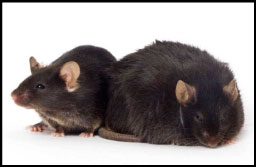
Transgenic mice exhibit a progressive neurological phenotype that mimics many of the features of HD. Onset of phenotype is apparent from approximately 8 weeks of age based on home cage behavior. Some functional tests indicate the presence of a motor impairment from 5-6 weeks and cognitive impairment from 3 weeks. Epileptic seizures are seen in a small percentage of transgenic mice. A failure to gain weight is more pronounced in males than females. Immunohistochemistry with antibodies raised against the N-terminus of huntingtin reveals aggregates in the form of intranuclear inclusions and neuropil aggregates.
Transgenic mice on a background that involves C57BL/6 and CBA display a progressive neurological phenotype that mimics many of the features of Huntington Disease in humans, including choreiform-like movements, involuntary stereotypic movements, tremor, and epileptic seizures, as well as nonmovement disorder components, including unusual vocalization. Frequent urination, loss of body weight and muscle bulk occurs through the course of the disease. Neurological developments include Neuronal Intranuclear Inclusions (NII), which contain both the huntingtin and ubiquitin proteins (NII have subsequently been identified in human HD patients); the onset of HD symptoms occurs between 9 and 11 weeks.
|
| References |
|
Original: |
J:36689
Mangiarini L et al.,
"Exon 1 of the HD gene with an expanded CAG repeat is sufficient to cause a progressive neurological phenotype in transgenic mice."
Cell 1996 Nov 1;87(3):493-506
|
|
All: |
217 reference(s)
|
|