Phenotypes associated with this allele
|
|
| Find Mice |
Using the International Mouse Strain Resource (IMSR)
Mouse lines carrying:
Pax6Sey-Dey mutation
(1 available);
any
Pax6 mutation
(90 available)
|
|
|
mortality/aging
|
|
• embryos die between E6 and E7
|
|
|
| Find Mice |
Using the International Mouse Strain Resource (IMSR)
Mouse lines carrying:
Pax6Sey-Dey mutation
(1 available);
any
Pax6 mutation
(90 available)
|
|
|
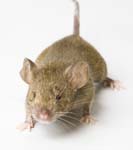
The Pax6Sey-Dey/Pax6+ mouse
vision/eye
|
|
• unlike in wild-type mice, basal cells are more rounded and the cell layers are not packed tightly
• no goblet cells are observed
• at 6 weeks, cell proliferation rates are increased (45% proliferative index compared to 4% proliferative index in wild-type mice)
• however, apoptosis rates are normal
• adhesion between cells in the suprabasal middle and superficial layers is disrupted
|
|
|
• the corneal epithelium is 1 to 7 cell layers thick instead of 8 to 10 as in wild-type mice
• reduction in cell layers is apparent at P14 and P21
|
|
|
• the stroma exhibits varied thickness and a general disorganizeation with large aggregates of laminn in the anterior region
|
|
|
| Find Mice |
Using the International Mouse Strain Resource (IMSR)
Mouse lines carrying:
Pax6Sey-Dey mutation
(1 available);
any
Pax6 mutation
(90 available)
|
|
|
mortality/aging
|
|
• 5% of mice die 8 to 10 hours after birth
|
vision/eye
|
|
• mice have a reduced retinal pigment layer
|
|
|
• mice exhibit a partial or complete lose of iris tissue
• mice have an eye phenotype similar to aniridia
|
|
|
• lens pit development is delayed by 1 to 2 days relative to in wild-type mice
|
|
|
• lens have anterior cataracts
|
|
|
• lens are small or absent
|
|
|
• coloboma is visible by 11 days of gestation
|
|
|
• mice have small eyes that are half the size of normal eyes
• the anterior chamber of the eye is missing
|
|
|
• the retina is abnormally folded
|
nervous system
|
|
• at day 7 to 8 of gestation 2 embryos were found with exencephaly
|
pigmentation
|
|
• mice have a white spot on their sternum that extends into a belt in some mice
|
|
|
• mice have a reduced retinal pigment layer
|
|
|
• mice have reduced pigmentation on their feet and tails
|
growth/size/body
|
|
• mice are 10 to 20% smaller in size than wild-type mice
|
|
|
• mice are smaller than wild-type mice before birth and remain so the rest of their lives
|
neoplasm
|
N |
• despite the loss of Wt1, no abnormal tumors are detected in mice
|
renal/urinary system
|
N |
• mice have normal urogenital organs
|
integument
|
|
• mice have a white spot on their sternum that extends into a belt in some mice
|
Allelic
Composition |
Pax6Sey-Dey/Pax6+
|
|
Genetic
Background |
involves: C3H/HeJ |
|
| Find Mice |
Using the International Mouse Strain Resource (IMSR)
Mouse lines carrying:
Pax6Sey-Dey mutation
(1 available);
any
Pax6 mutation
(90 available)
|
|
|
mortality/aging
|
|
• fewer than expected heterozygotes survive to birth
|
growth/size/body
|
|
• heterozygous embryos are on average 13% smaller than wild-type littermates in crown-rump length
|
vision/eye
respiratory system
|
|
• 23% of embryos from a heterozygous intercross show not development of nasal placodes
|
taste/olfaction
|
|
• 23% of embryos from a heterozygous intercross show not development of nasal placodes
|
vision/eye
|
|
• 23% of embryos from a heterozygous intercross show no development of the lens
|
|
|
• approximately a third of the embryos 14.5 days or older from heterozygous intercrosses are colobomatous
|
craniofacial
|
|
• 23% of embryos from a heterozygous intercross show not development of nasal placodes
|



 Analysis Tools